
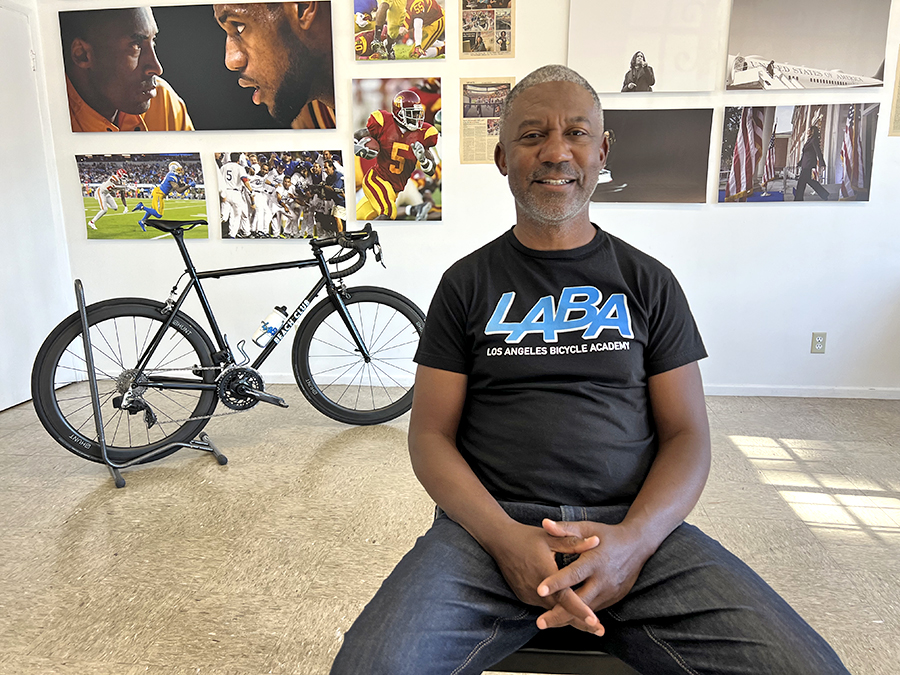
The youth earn-a-bike program teaches youth how to repair and refurbish bicycles, and prepares them for careers in the cycling industry.
By Jason Lewis
The global bicycle market size was estimated at $84 billion in 2025, with $15 billion of that coming from the U.S. The market is gaining momentum driven by an increasing adoption of cycling for daily mobility, fitness, and short-distance community riding. Like many lucrative industries, Black communities tend to be priced out or left out. Los Angeles native and Dorsey High School alum Damon Turner has stepped up to ensure that younger people in the greater Crenshaw district are aware and have access to this industry.
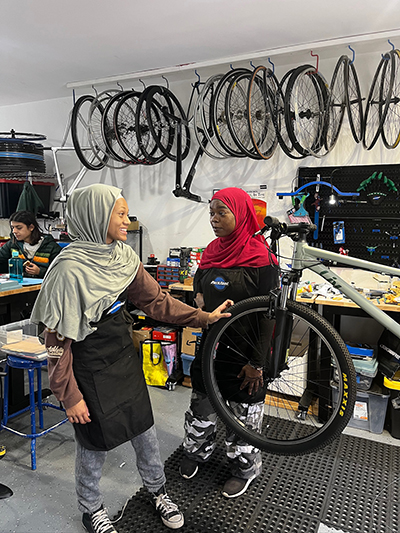
Through the Los Angeles Bicycle Academy, a nonprofit organization, youths ages eight to 18 attend a bicycle education and youth earn-a-bike program. The eight-week curriculum teaches the students how to repair and refurbish bicycles.
“They’re taking a bike completely apart and reassembling it,” Turner said. “They’re also making adjustments to the bike. The curriculum relates to every aspect of the bicycle. They go from brake adjustment, to gear adjustment, to flap repair, to disassembling a chain. It’s broken up into several parts and they learn it all.”
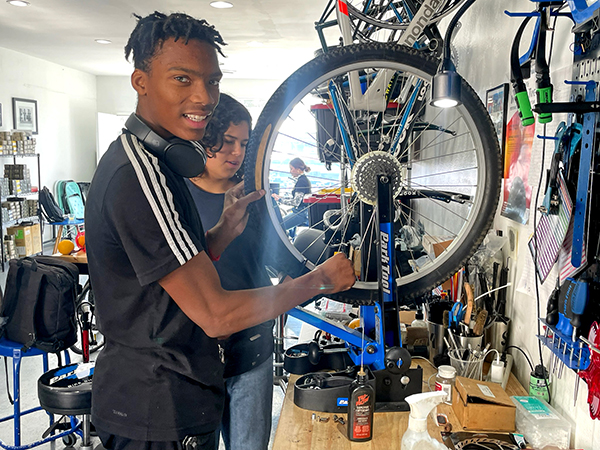
At the end of the program the students get to keep the bicycles that they worked on. The bicycles that are used in the program are donated, and this program can always use more bicycles.
“Everybody has a bicycle laying around in their garage,” Turner said. “And that’s primarily where most of the bikes that were earned by young people, were donated bicycles.”
This program also gives the students information about careers in the bicycle industry.
“Everything related to where you can go in the bicycle industry in a career,” Turner said. “We connect the careers that exist in the bicycle industry and show young people the possibilities that are around their interests.”
Careers in racing can be lucrative and can come with perks.
“Mechanics for a pro tour team that races in let’s say the Tour de France, they’re making $80,000 a year on top of traveling all around the world,” Turner said. “That’s just one position and within a team. There’s also career opportunities in the bicycle industry.”
Turner is a Los Angeles native who is from Leimert Park. Like many people, he started riding bicycles as a child around his neighborhood, and he held a job as a bicycle messenger in downtown Los Angeles.
“I was getting paid to ride a bike to deliver legal documents,” he said. “I continued to ride bicycles. I competed a little bit, and that evolved into me starting a successful team with a partner, and that evolved into me starting my own team. That led me to starting the youth bike program.”
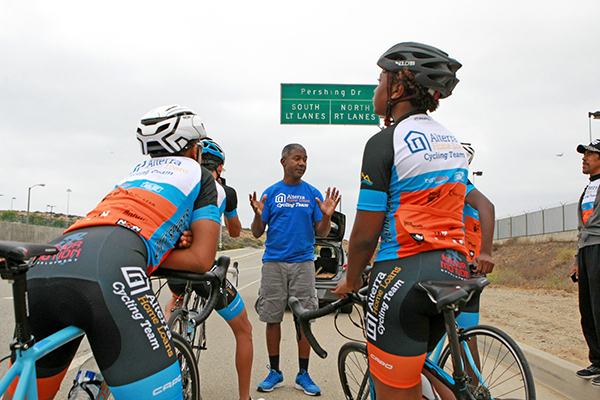

Turner leads the students on community bike rides where they learn traffic laws and how to ride safely on cycling routes.
A program like this is important because cycling has heath and fitness benefits, and it is a means of transportation. Creating spaces for bicycling are not as prevalent in Black communities as it is in other communities.
“This is a normal thing that exists outside of Black communities,” Turner said. “Bike lanes that are as wide as a car lane. That’s what we’re fighting for. To create those spaces in our community and normalize it.”
Career wise, Turner points out that there is not a lot of Black representation in the bicycle industry, but he also points out that there are so many Black people who ride bicycles that they should be a larger portion of the industry.
Setting children on a career path can be life changing and after-school and weekend programs in Black communities can function as gang prevention programs because it occupies their time with something positive.
“Doing this after school is a critical time,” Turner said. “During the spring and summer months when you have longer days, you can go out and do an hour ride easily. The impact of that is unbelievable. There’s been a lot of stories of transformation around a kid who learned how to ride a bicycle and it changed everything about them.”
Turner continues to ride his bicycle multiple times a week, heading up to Griffith Park or along the beach to Malibu or Palos Verdes. He partners with local cycling groups such as We Major LA for community rides that his students participate in.
For more information, visit www.labikeacademy.org and follow them on social media.